A blog about design, education and anything else that takes my fancy

Tuesday, August 28, 2007

The Seven Levels of Product Packaging

"A couple of weeks back Apple came out with a new keyboard, and due to the local Mac retailers not receiving their shipments immediately, I decided to order direct from Apple. I picked up the box today, and expecting something vaguely keyboard-sized, I nearly choked when the receptionist pulled out a rather large box. Inside of which was another box. Inside of which was another box. Not to mention the plastic. Observe:"


Many layers of packaging before finally reaching the keyboard.

Figure: The seven levels of hell product packaging.


(Via mezzoblue.)

Bookmark and Share

Monday, August 27, 2007

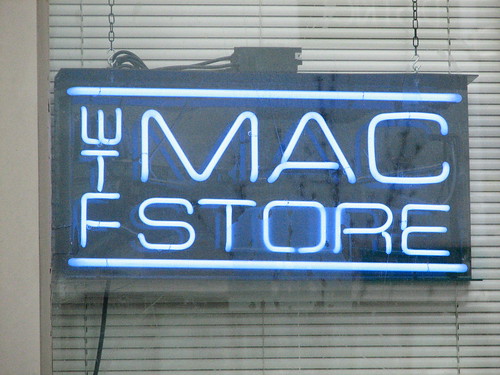
WTF Mac Store


WTF Mac Store, originally uploaded by Jeff Carlson.

This neon sign is actually saying "The Mac Store"...

Bookmark and Share

Saturday, August 25, 2007

Irony

From BBC News 'Have Your Say':

Jeremy Paxman has criticised the BBC and the TV industry as a whole at a lecture in Edinburgh. He said there was too much focus on audience reaction. Do you agree?


How ironic can you get?

Bookmark and Share

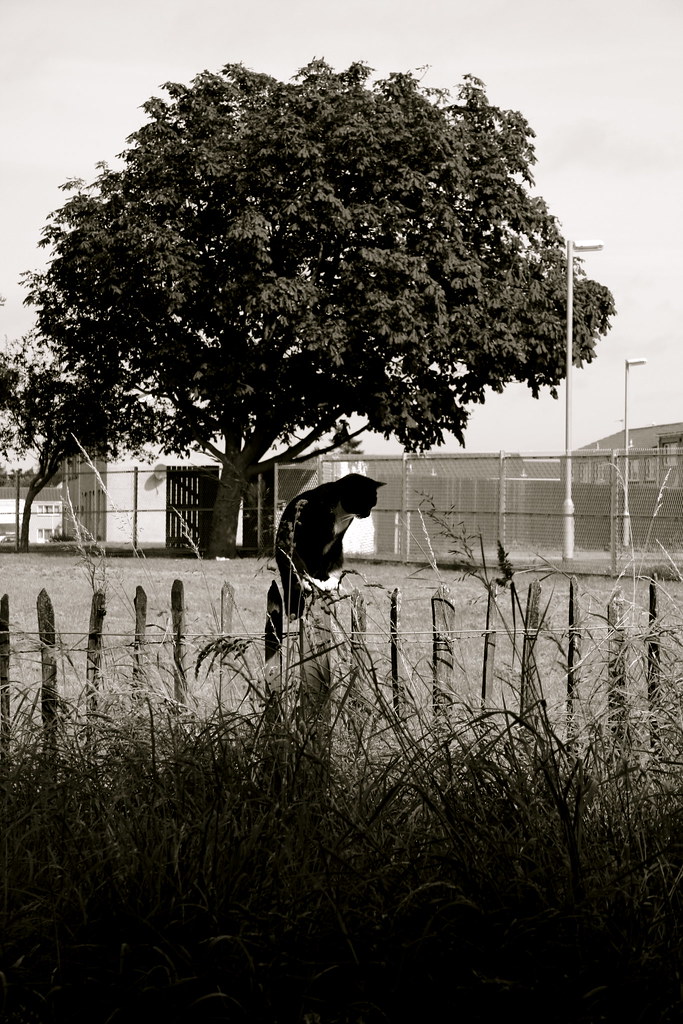
Patience


I photographed this cat last week while on a walk in the Scottish countryside. It was staring intently into the long grass, presumably waiting for something warm, small and furry to show itself.
It's not a great picture but I love it.

Bookmark and Share

Wednesday, August 22, 2007

Whoops! She did it again

Britney Spears's perfume logo is a rip off?


Read this article for the full story. If it's a coincidence it's bizarre. And if it's theft it's brazen.

(Via Daring Fireball)

Bookmark and Share

Instant eBay profit if you're quick...

Instant eBay fortune collector's item! Quick, get out there and buy them...

The Sun has issued an article explaining the recall of the Doctor Who 2008 Annual. According to The Sun, the show's title was printed on the cover as Doctor Hwo.
THOUSANDS of Doctor Who books have been pulped — because of a spelling mistake on the front cover.

"Publishers Penguin had sent the 2008 annual — featuring current Doctor David Tennant — to shops before the error was spotted.

But a red-faced insider, who refused to reveal the gaffe, said: ‘It’s embarrassing. The books are cherished so the publishers decided to recall them.’"


(Via Outpost Gallifrey.)

Bookmark and Share

Tuesday, August 21, 2007

A foul slur!


It's not true!

Bookmark and Share

The horror of blimps

"At this point it is important to know that my house has central heating. I have it configured to blow hot air out on the ground floor and take it in at the second floor to take advantage of the fact that heat rises.

The blimp which was up until this moment a fun toy here embarked on a career of evil. Using the artificial convection of my central heating, the blimp stealthily departed my office. It moved silently through the living and drifted to the staircase. Gliding wraithlike over the staircase it then entered the bedroom where my wife and I lay sleeping peacefully."

Worth reading in full....

(Via AlwaysBETA)

Bookmark and Share

Stupid Design

A funny counterargument to the concept of "Intelligent Design".


Thinking about it, if the Universe is actually 'designed' then it would pretty much get an F. Nice in places, but really not very good in others...

Bookmark and Share

Monday, August 20, 2007

Wil Wheaton: "yet another reason why going to the movies sucks"

Wil Wheaton (yes, he of Star Trek: The Next Generation infamy, keeps it measured and reasonable when telling us why going to the movies sucks:

for me, going to the movies has been only slightly less annoying than going to the DMV, thanks to outrageous ticket prices, mega-multiplexes that leave stains on their screens and never enforce the 'Hey, shut the hell up' rule beyond an entirely ineffective announcement at the beginning of the film, parents who think it's entirely appropriate to bring small children into R-rated movies, and the latest joy: teenagers who leave their goddamn cellphones on and when they're not talking to each other light up the theater with hundreds of tiny screens while they send and read text messages.

Yeah, I'm really glad I have this home theater system, because ... there's a good chance I'm going to snap one day and force feed some fucking idiot his goddamn cell phone.


(Via WWdN: In Exile.)

Bookmark and Share

Saturday, August 18, 2007

Critiquing design for sustainability

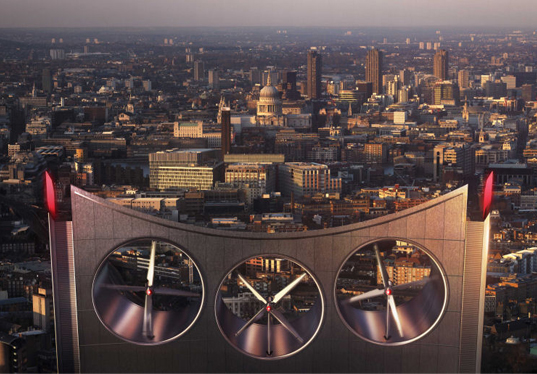
I like the philosophy here - that design which only contributes towards offsetting its own environmental impact is not 'good' for the environment, simply not as bad as it could have been.

Perhaps this needs to be considered more widely. The last time I flew I offset the carbon. It only cost £1. Well why not pay £2 and offset the carbon of the person next to me, just in case he hasn't? Or even if he has? Why do we think in terms of ofsetting our personal impact when it would be far more cost-effective and probably easier to jump right in and think more socially.

Would this encourage others not to do it, thinking that do-gooders like me will do it for them? Well not if you subscribe to Richard Dawkin's ideas of altruism in The Selfish Gene where he explains why strangers risk life and limb to save the lives of other people's kids. Because we know that if we do we encourage a society that will look after our own kids when we're not able to.


Unless a 'green' building actively remediates its local environment – for instance, scrubbing toxins from the air or absorbing carbon dioxide – that building is not 'good' for the environment. It's simply not as bad as it could have been.

Buildings aren't (yet) like huge Brita filters that you can install in a city somewhere and thus deliver pure water, cleaner air, better topsoil, or increased biodiversity to the local population.

I hope buildings will do all of that someday – and some architects are already proposing such structures – but, for the most part, today's 'green' buildings are simply not as bad as they could have been.

A high-rise that off-sets some of its power use through the installation of rooftop wind turbines is great: it looks cool, magazine readers go crazy for it, and the building's future tenants save loads of money on electricity bills. But once you factor in these savings, something like the new Castle House eco-skyscraper still ends up being a net drain on the system.

It's not good for the environment; it's just not as bad as it could have been.


(Read the whole thing at BLDGBLOG: Architectural Sustainability.)

Bookmark and Share

Learn to Draw


The Guardian has a supplement today that shows you how to draw various animals in several easy steps. If you can't get hold of the paper, you can download PDFs to print out.

Sod the kids, this is going to keep me quiet for hours!

Bookmark and Share

Design Gangsta Rap


(Via Noisy Decent Graphics)

Bookmark and Share

Friday, August 17, 2007

Mary Beard in The Times: Are A levels (still) dumbing down?

Mary Beard emailed me in response to my little rant yesterday (I could blame the late hour but what's my excuse at other times?) on A-levels pointing me to her very interesting article in The Times Literary Supplement which is well worth a read.

This paragraph struck home for me:

"I know of at least one A level examiner who has given up because he was forced to mark down candidates who wrote really intelligently about a subject but didn’t give the points that were demanded by his ‘marking criteria’.


I never did A-levels, leaving school as I did at 16 (I later did my degree and MA with the Open University while working full time - these kids today don't know the meaning of the word 'stress'!) but I recently found my old O level and 16+ certificates which have just passed their 20th anniversary. I failed English Literature, Religion and Art. (E, E, and D respectively). I got an A in English Language (which is writing, effectively) but failed the exam on comprehension of, in my case, Jane Eyre and The Importance of Being Ernest, two texts which I now count as among my favourites. My problem, thinking back, was that I was a bit too clever for my own good, taking issue in my essay on Jane Eyre, with the idea of literary criticism that pretends to know what was in the author's mind. A bit precocious, no doubt, and certainly not answering the question, but I wonder if the examiner who failed me didn't think my answer was worth a bit of discretion.
Religion I failed because I was going through my rebellious phase at the time and remember distinctly challenging the Catholic church's policy on abortion and, for some reason, nuclear disarmament.

Art I failed because, according to the teacher who marked me (it was a moderated course work exam) I 'lacked confidence'. Way to boost that, miss!
I wonder if she knows what I do for a living now?

Anyway, the issue of rewarding risk and unexpected outcomes is one that always comes up in art and design education whenever assessment criteria and learning outcomes are discussed (of which more shortly) but the easy answer to that is to write that into the things, but at least make it transparent to everyone concerned.

This next section in Mary's article also chimes with me

"When they get to university the hang-over of this is still horribly apparent. Students will press you to say what kind of class you think their essay would be given. If you respond ‘a 2.1’, their next question is likely to be, ‘So what have I left out that would get me a first’. As if getting a first was simply about fulfilling all the assessment criteria.

But tub-thumping about standards is a bit of a thoughtless response to all this. The sad thing is that the tick-box style of marking is an almost inevitable consequence of the very proper attempt to democratize A levels. It’s all very well thinking that the open ended intellectual essay style is what should be rewarded. But what do you do if you go to a school where they don’t know the rules for that genre? Isn’t it reasonable for you to expect to be told what you would need to do to get an A?

Perhaps even more pressing is the question of the examiners themselves. In the old days, when A levels were a minority option, you had a small group of experienced (and, no doubt, underpaid but devoted) examiners. You might trust them to make reasonably independent judgments about a kid’s essay (and, in any case, the numbers were small enough for them to be checked up on). Our recent mad fixation with formal assessment has more than quadrupled the numbers of examiners that are needed –  the demand being such that in some subject trainee teachers are used to mark the most important tests in a child’s career. So, of course, we have to generate firm rules and fixed criteria, simply to train and police the examiners.

The real question isn’t whether we are dumbing down. It’s what on earth we think all this examining is for. If it’s for choosing the brightest, it’s a blunt, time-consuming and inefficient instrument indeed. But maybe that’s not its point – and we should be thinking of quite different ways to do that."


(A quick aside... Several years ago, when the course I ran was validated by Oxford Brookes, I was told never to use a classification (2.1, 2.2 etc) as a mark, only as a degree, and I've stuck to that advice ever since. But it's still quite common to hear first year students talking about getting a 'first' - to me that sends the wrong signal, that simply maintaining that level of performance will guarantee a first at graduation)

Now I'm probably going to go off at a slight tangent here. (It's part of my charm).

I'm a big fan of learning outcomes and assessment criteria, things that are fashionably unfashionable at the moment, mainly because very few people can write the damn things properly and so assume the idea is at fault rather than the implementation. I think Mary's critique is spot on and she identifies the same issue: that we are using the wrong methods for the things we are trying to identify, and that these methods are directing students' learning.

John Biggs, in "Teaching for Quality Learning at University: What the Student Does", describes exactly how this happens and what to do about it. It's a must-read for anyone involved in assessment and apart from anything else makes you realise that assessment is teaching, in that students will quite rightly (as do we all) work out what has to be learnt and done based on what it takes to pass. Writing your course and its assessment in a way that encourages 'deep learning' is the key to avoiding the issues Mary identifies - but that is more than, as some would have it, simply telling students that to get an A they have to read lots of books and write lots of essays. Learning is a strategic activity - it's a basic human characteristic - and as much as it might pain the more romantic (read dinosaur-like) academics to acknowledge it, so is teaching.

Bookmark and Share

Dog exercise is among police FOI requests

The Scotsman reports that my local police service*:

"yesterday revealed some of the more unusual requests made to them in the past two years.

Tayside Police showed under Freedom of Information (FOI) legislation that officers were asked if police dogs used treadmills or exercise machines to stop them becoming overweight, what a beggar's average daily income is and how many parking tickets are given to foreign nationals.

Other bizarre questions submitted to the force included a request for information about an incident in which a flowerpot was 'criminally damaged'.

Another was for details of how many Dundee taxi drivers accessed internet paedophilia sites between the hours of 4am and 7am.

The force was also asked whether it employed psychics to help with the work it carries out. A spokeswoman confirmed they did not.

The health of police dogs seemed a particular cause for concern. As well as being quizzed over their exercise regime, the force was also asked whether the animals became travel-sick, and if so, how they overcame it.

A Tayside Police spokeswoman said: 'All the police dog handlers exercise their dogs several times a day in the normal fashion - by taking them for a walk'."


I'm going to make a request under the act to find out how much time and money is being wasted by people asking such stupid bloody questions.

(* The Scotsman calls it a 'police force' but the corrct term these days is 'police service'. I learnt that watching 'Hot Fuzz' at the weekend - one of the funniest films I've ever seen).

(Via The Scotsman.)

Bookmark and Share

BBC Radio logos - an idea half thought through

Michael Johnson writes almost exactly the same thing I woke up this morning thinking about (I really must get out more):

Earlier this year, Fallon beat off several proper design companies to review BBC radio’s idents.

Here was a chance for advertising to flex those design muscles, and show ’em how it’s done. And yes, they are better than they were, but that’s damning with faint praise - look how awful they were before.

old_bbc_logos

Taking their cue from the previous Radio 1 identity (a ‘1’ in a circle) they’ve taken the decision to, er, put all the numbers in circles. Coloured circles, mind you. Some of the numbers have little ‘gags’ - the ‘3’ contains a bass clef (for music, you see), the ‘4’ a quote mark (I guess that must be for talking), and so on.

new_fallon_logos

Not being a Radio 7 listener I presumed it aired DIY shows until it was pointed out that the symbol was a smile, not a bent nail (shame - that’s an interesting idea for a logo).

What was probably quite a neat little system fell apart somewhere between soho and white city - rather than have any gags for radios 1, 2, 5 and 6, we just have coloured numbers. Oh, and some hair for the Asian network. All for 120,000 pounds.

Now don’t get me wrong, I really like Fallon’s work and think they have a better ‘design’ eye than most. But if we’re applying the ‘wish I’d done that’ test, well I don’t. Had this been a blind tasting I’d have guessed this came from a mid-table design company who had their first idea messed up by the client.

Mmm. Maybe this design thing isn’t as easy as it seems?

This is an adaptation of an article by Michael Johnson in this week’s Campaign magazine


(Via the johnson banks thought for the week.)

Bookmark and Share

Thursday, August 16, 2007

'Mickey Mouse' subjects aren't 'easier'...

The A-level results were published today (for those not in the UK, those are the qualifications studied at 17-18 years and used to gain entry to university).
Once again, grades are improving, sparking the usual crap about them getting easier, usually from people who think we should still be using slide rules in maths and not teaching people about media literacy.

But there are some interesting things in there. For a long time it's been claimed that students are choosing 'soft' subjects like arts and media studies over 'hard' subjects like maths and science because they're easier.

Well take a look at the results presented here and see if gambling on getting a higher grade in media studies over maths is one that will pay off.

To my eyes, giving this a quick glance would suggest not that it's easier to get an A in science than it is in media studies (the comparison's bizarre - apples and oranges) but simply that media studies isn't a ticket to a guaranteed 'A'.
Maybe some students are choosing media studies rather than science for ease rather than interest, but anyone who thinks media theory is a walk in the park clearly hasn't read any! (I mean, really, I dare you).

Something else that strikes me about the results is the remarkably even distribution of grades. Hardly a bell curve in sight except maybe for business studies - another 'soft' subject that seems rather loathe to award A grades.

All very interesting...
I have no idea what it means, though, to be honest, and I wish the idiots who get trotted out at this time of year would admit they don't either. It is possible for more people to get better grades than fifty years ago - it's what you'd expect of any civilisation that claims to be advancing.

Bookmark and Share

Cityware - an interesting Facebook application

Here's an interesting idea from the uNiversity of Bath. Cityware is a Facebook application that connects to a Bluetooth-enabled device and logs who you encounter throughout the day (assuming they are also on Facebook and using Cityware).

It has a lot of potential in teh social networking area, not to mention making those adverts in Time Out redundant ("to the girl with blonde hair on the 7.12 to Paddington. I was the weirdo who kept staring at you. Call me.") as you could, in theory, look at your daily log and then pry in to the personal details of anyone who even so much as wandered past you in the supermarket.

Scary. But there you go. I'm up for giving it a go, in the name of science.

(Of course, it'll give the civil liberties lot nightmares. If the government suggested everyone wander round with devices tracking their movements there'd be uproar. But as it's Facebook, it's okay...)

To sign up you need to visit the Cityware page on Facebook. Oh, and you also need to be living in a Cityware node but there are only three in the world at the moment. However, it's easy to set your own computer up as a node.
So although I'm now using this application, as I don't have any plans to visit UC San Diego, the University of Bath, or UCL in London any time soon it'll be a long time before I pop up on anyone's radar. Unless we can get one started where I work. In the interests of science.

On second thoughts I've just thought of several reasons why this might be a bad idea... It would obviate the need for gossip, for one thing. Just check Facebook every morning and you'd immediately see if your suspicions about Jill from Accounts and Fred from Catering were true (made up names and people, incidentally - heaven forbid I've stumbled on something there!)

Edit: In a (rare) moment of self-doubt I looked up 'obviate' wondering if it's one of those words I've either misheard or used incorrectly. Like 'fulsome'. Turns out I'm right - it means 'avoid' (which makes me wonder why I didn't say that - but wrong in that 'obviate' means 'avoid the need for' so instead of 'obviates the need for gossip' I should've said 'obviates gossip'.

You learn something new everyday!

Bookmark and Share

What's in @ name? Chinese watchdog queries parents' choice

A Chinese couple who wanted a distinctive name for their baby boy and came up with the symbol @ have earned a rebuke from the government's language watchdog.
The parents claimed the commonly used email symbol, pronounced in English as 'at', sounded like the Mandarin for 'love him' when spoken by Chinese.

But the government's state language commission has taken a dim view of the attempt to break the mould in a country where almost 90% of the country's 1.3 billion people share just 129 surnames."


Full article in The Guardian


I like this story but the parents have ignored an important issue. What's his email address going to be?
Especially if he gets his own domain...

Bookmark and Share

Stop your food playing with you...

Bookmark and Share

Wednesday, August 15, 2007

YouGov needs you! (And will pay...)

Ever wondered who takes part in opinion polls? YouGov, a web-based polling company, is recruiting participants. All you have to do is sign up on their web site and reply to any emails they send you. You don't have to take part in every survey but for those you do take part in, your account will be credited with 50p. When you've got £50 in your account they will send you a cheque. (You will be credited with £1.00 when you sign up).

If nothing else, it's a way to earn a bit of cash ;-)

Surveys are commissioned by clients on everything from voting intentions to shopping habits. But you won't be hounded with spam or marketing messages from clients - your details are confidential.

Click here to sign up and feel free to pass the information on.

Tuesday, August 14, 2007

Object oriented programming for cats

Baudrillard missed a trick missing cats out of his analysis of the system of objects. Cats, I'm convinced, would be gold medallists if that game where you have to spot what object has been taken away or added to a table or tray were ever an Olympic event (and cats could enter).

Cats think in a unique way that has been harnessed by many of the great programming languages. Object oriented programming (OOP) is the driver behind Java, for example, and other computer languages I can't be bothered to look up on Wikipedia.

This is how cats assess anything you might bring in to the house. Note that they will spot anything new immediately. This is known as a 'cat scan'.


  1. Can I eat it?

  2. Can I rub my nose against it?

  3. Can I scratch it?

  4. Can I jump in it?

  5. Can I lie down on it?

  6. Can I sit on it?

  7. Can I bat it across the floor for a few seconds then lose interest?


Answering no to any of those questions sends the cat on to the next. Answering yes will not prevent it then trying out subsequent questions.

There are sub-classes of object which do not require it to be a new addition to the environment:

Is the object an item of clothing? Yes? Go to next line. No? Go to subroutine (furniture)

Has it been ironed? Yes? Sleep on it. End program.

Has it just been worn? Yes? Sleep on it. End program.

Is it likely to be needed in the very near future? Yes? Sleep on it. End program.

Is the object a piece of furniture? Yes? Go to next line. No? Go to subroutine(warmObject)


Has someone just been sitting on it? Yes? Sleep on it. End program.

Is someone likely to want to sit on it again in the near future? Yes? Sleep on it in a cutely adorable way. End program.

Is the object warm? Yes? Go to next line. No? Go to next subroutine.

Sleep on it (optional: walk round and round for several minutes first then possibly move front paws up and down in a padding motion. If object=legs, do this with claws out.)

Is the object a newspaper? Yes? Go to next line. No? Go to next subroutine (notAnObject)

Is the newspaper being read? Yes? Sit on it. Then lie down on it.

No? Sit on it anyway until it is.

No object spotted

For time > 30 seconds < 5 minutes

Random(sleep, clean, eat, annoy, beg to be let out then come straight back in again, chase something invisible, stare into space)

Repeat until newObject=true

Bookmark and Share

Monday, August 13, 2007

Anti University advertising campaign launched


A new advertising campaign is launching in the UK aimed at stopping parents pushing their kids down the university route when it doesn't suit their aspirations.

I'm in two minds about this - aganst it because I think there's nothing wrong with a plumber having a degree in philosophy, for it because I think a lot of people sign up for degrees who don't really want one, or intend to do what's required, but just want a job for which other routes are - or should be - available.
In design, other routes are available if you only want to be a designer without doing a degree and all that entails, but they're not as successful in recruiting applicants partly because the industry itself places an emphasis on getting graduates in to non-graduate level jobs. Should you need a degree to be an artworker? No.
The irony is, the newest non-academic route in to the design industry is the Creative Apprenticeship championed by Creative and Cultural Skills (i.e. the design industry itself). In this, school leavers go to work in the industry and are trained on the job.
Early trials of that weren't successful because, they admitted, employers prefer graduates because they don't have to pay them (in other words, free 'placements' and 'trials' - odd behaviour for an industry against free pitching) or pay for their training.

So it's not the level of education that is important, it's the low cost of recruiting a graduate that makes it the prime entry route in to the industry...

You can watch the ad here - I think it's rather good.

More on the campaign at www.edge.co.uk

Bookmark and Share

Gravitas versus graphics: ITV News ditches the gimmicks

The Guardian reports:

ITV is to go back to basics with its news bulletins and cut back on gimmicks. Ever since Kirsty Young changed convention by perching on a desk at Five News, broadcasters have been striving for new ways to make news bulletins more innovative and informal.
Bulletins have also increasingly relied on the more hi-tech graphics pioneered by 24-hour news channels. However, sources say ITV plans to ensure there are fewer distractions for viewers and is planning 'more substance' to its news bulletins.

Proposed changes are understood to include allowing ITV's 6.30pm bulletin anchors Mark Austin and Mary Nightingale to sit down to read the news. Their height difference has often caused comment.

According to sources, ITV's director of news and sport, Mark Sharman, is reviewing all areas of the output and prefers gravitas to graphics.


Personally I think this is great. I can't watch the news these days for all the flashy animations and other graphics. Hopefully they'll also get rid of the 'tell us what you think' rubbish as well. Who wants to hear what complete idiots have to think about anything? Surely that's what blogs are for?

Oh, hang on...

Bookmark and Share

Sunday, August 12, 2007

I fought the Law...


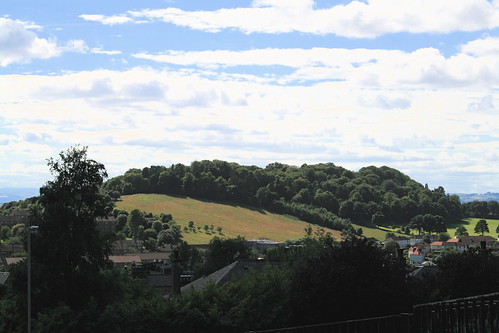
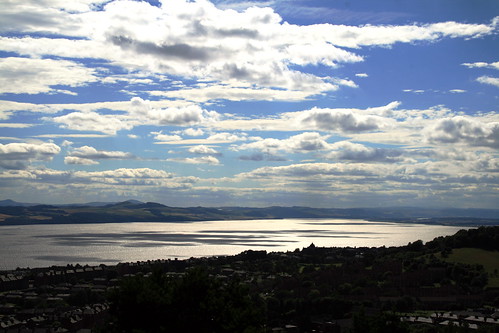
Dundee is dominated by a massive hill (the photo above doesn't tell the whole story - I took it when I was nearly at the top) called the Law (it means 'hill'), formed by the plug of an ancient volcano. A smaller one forms Balgay Hill which is just up the road from me and is home to Britain's only public observatory.


(Balgay Hill, above)

After a year of promising myself I'd do it, I finally got round to walking up the Law the other week and it was well worth the effort. The views from the top are stunning.


The photo above is the view across the Tay (known as the Silvery Tay for obvious reasons) to the Kingdom of Fife.


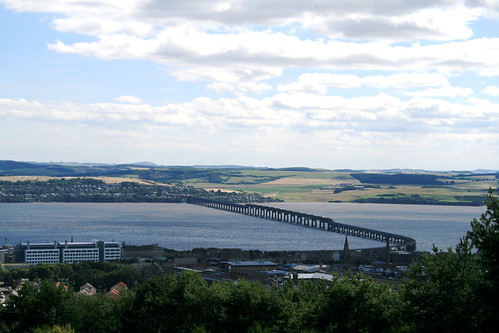
This photo shows the Tay Rail Bridge. The first one collapsed famously one New Year's Eve just over 100 years ago, killing everyone on the train. Spookily, you can still see the original piles next to the current bridge. At the time it was the longest rail bridge in the world and is still the longest in Europe, apparently.
The white building in the bottom left corner is the life sciences building at the university. My office is just behind it.


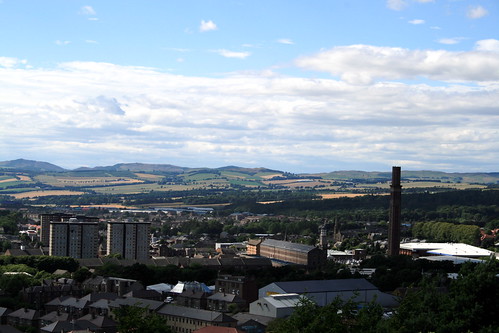
To the north you can see all the way to the Sidlaw Hills, but between here and there are relics of Dundee's industrial heritage. Several of the old textile mills, some of them massive, remain and even where they've been knocked down some of the chimneys remain. Its shipping heritage (Dundee was home to ship builders and Britain's whaling fleet until relatively recently) can be seen in the east of the city.


At the top of the Law is a large war memorial that towers over you, and over the city. The lamp is lit on a few occasions each year, in particular Remembrance Sunday, and can be seen for quite some distance. This photo doesn't do justice to the scale of the thing.


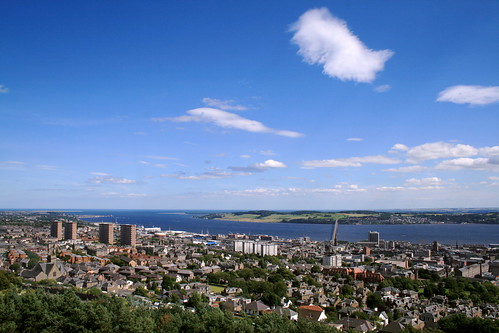
When youreach the summit you can see over towards the east and the mouth of the Tay where it meets the sea. In the distance you can see Broughty Ferry and its castle on the left, and Tayport and its large sandy beach on the right. Just past Broughty Ferry is Carnoustie where this year's Open golf tournament was held.

At the moment a large pod of bottlenosed dolphins is making this part of the Tay its home, as it does each summer.
The bridge in the distance is the Tay Road Bridge that replaced the ancient ferry service connecting Angus to Fife.

You can see all the photos I took here, or as a slideshow.

Bookmark and Share

Hair Today, Gone Tomorrow


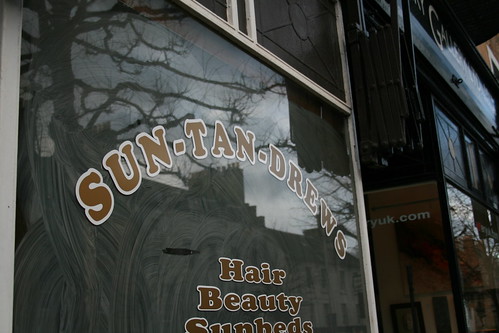
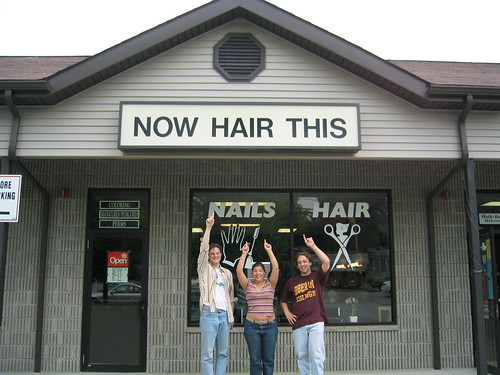
There is a bit of a tradition for barbers and hair salons to have silly names like "Beyond The Fringe" or (if up a flight of stairs) "A Cut Above".

Last year I found one in St Andrews, pictured above, called "Sun Tan Drews" (ho ho). I put it up on Flickr and was recently invited to add it to a group of other punny salon photos. There are 138 at the moment and they're well worth a look if only for a bit of a groan.

Click here for a slideshow, or click here to visit the gallery.

Bookmark and Share

It's funny 'cos it's true: how to kill a graphic designer

From ghisroy.com - Rants, Comics & other Sillyness:

As everyone knows, graphic designers are the reason there are so many wars in this world. They get inside our heads with their subliminal advertising, force us against our will to spend money on the worst pieces of shit, and eventually, drive us to depression and random acts of violence. And of course, most of them are communists.

So to do my part to save the world from them, i made a list of things you can do when working with a graphic designer, to assure that they have a burn-out and leave this business FOREVER.

1-Microsoft Office

When you have to send a graphic designer a document, make sure it's made with a program from Microsoft Office. PC version if possible. If you have to send pictures, you'll have more success in driving them mad if, instead of just sending a jpeg or a raw camera file, you embed the pictures inside a Microsoft Office document like Word or Powerpoint. Don't forget to lower the resolution to 72 dpi so that they'll have to contact you again for a higher quality version. When you send them the 'higher' version, make sure the size is at least 50% smaller. And if you're using email to send the pictures, forget the attatchment once in a while.

2-Fonts

If the graphic designer chooses Helvetica for a font, ask for Arial. If he chooses Arial, ask for Comic Sans. If he chooses Comic Sans, he's already half-insane, so your job's half done.

3-More is better

Let's say you want a newsletter designed. Graphic designers will always try to leave white space everywhere. Large margins, the leading and kerning of text, etc. They will tell you that they do this because it's easier to read, and leads to a more clean, professional look. But do not believe those lies. The reason they do this is to make the document bigger, with more pages, so that it costs you more at the print shop. Why do they do it? Because graphic designers hate you. They also eat babies. Uncooked, raw baby meat.

So make sure you ask them to put smaller margins and really, really small text. Many different fonts are also suggested (bonus if you ask for Comic Sans, Arial or Sand). Ask for clipart. Ask for many pictures (if you don't know how to send them, refer to #1). They will try to argument, and defend their choices but don't worry, in the end the client is always right and they will bow to your many requests.

4-Logos

If you have to send a graphic designer a logo for a particular project, let's say of a sponsor or partner, be sure to have it really really small and in a low-res gif or jpeg format. Again, bonus points if you insert it in a Word document before sending it. Now you might think that would be enough but if you really want to be successful in lowering the mental stability of a graphic designer, do your best to send a version of the logo over a hard to cut-out background. Black or white backgrounds should be avoided, as they are easy to cut-out with the darken or lighten layer style in photoshop. Once the graphic designer is done working on that bitmap logo, tell him you need it to be bigger.

If you need a custom made logo, make your own sketches on a napkin. Or better yet, make your 9 year old kid draw it. Your sketch shouldn't take more than 5 minutes to make. You don't want to make something that's detailed and easy to understand, because the less the designer understands what you want, the more you can make him change things afterwards. Never accept the first logo. Never accept the 9th, make him do many changes, colors, fonts & clip art. Ask him to add a picture in the logo. Bevels. Gradients. Comic Sans. And when he's at his 10th attempt, tell him that you like the 2nd one the most. I know, it's mean but remember: graphic designers are the cause of breast cancer among middle aged women.

5-Choosing your words

When describing what you want in a design, make sure to use terms that don't really mean anything. Terms like 'jazz it up a bit' or 'can you make it more webbish?'. 'I would like the design to be beautiful' or 'I prefer nice graphics, graphics that, you know, when you look at them you go: Those are nice graphics.' are other options. Don't feel bad about it, you've got the right. In fact, it's your duty because we all know that on fullmoons, graphic designers shapeshift into werewolves.

6-Colors

The best way for you to pick colors (because you don't want to let the graphic designer choose) is to write random colors on pieces of paper, put them in a hat and choose. The graphic designer will suggest to stay with 2-3 main colors at the most, but no. Choose as many as you like, and make sure to do the hat thing in front of him. While doing it, sing a very annoying song.

7-Deadlines

When it's your turn to approve the design, take your time. There is no rush. Take two days. Take six. Just as long as when the deadline of the project approaches, you get back to the designer with more corrections and changes that he has time to make. After all, graphic designers are responsible for the 911 attacks.

8-Finish him

After you've applied this list on your victim, it is part of human nature (although some would argue weather they're human or not) to get a bit insecure. As he realises that he just can't satisfy your needs, the graphic designer will most likely abandon all hopes of winning an argument and will just do whatever you tell him to do, without question. You want that in purple? Purple it is. Six different fonts? Sure!

You would think that at this point you have won, but don't forget the goal of this: he has to quit this business. So be ready for the final blow: When making final decisions on colors, shapes, fonts, etc, tell him that you are disappointed by his lack of initiative. Tell him that after all, he is the designer and that he should be the one to put his expertise and talent at work, not you. That you were expecting more output and advices about design from him.

Tell him you've had enough with his lack of creativity and that you would rather do your own layouts on Publisher instead of paying for his services. And there you go. You should have graphic designer all tucked into a straight jacket in no time!

Bookmark and Share

Saturday, August 11, 2007

Stopped Clocks


Here's an interesting project. Stoppedclocks.com aims to catalogue Britain's thousands of stopped clocks on high streets and in villages, and then work with the people involved to get them started again.

There's something a bit sad about a stopped clock - it suggests all is not well with the world.

From the site's creator:

I once took a walk around a square mile in central London, I found 11 stopped clocks, either Municipal clocks, church clocks or otherwise public clocks. After poking about and doing some research, I discovered that it really does not cost much to fix a clock, as there is a tendency within clock repair to replace very old clock mechanisms with a mix of digital and analogue mechanisms. For an average of £1,000, each of the clocks that I found could be repaired.

Clocks in the public sphere were once really vital - not everyone had watches, let alone wrist-watches until the early 70’s - you needed to be able to see what the time was and so they truly had a public function. Nowadays, with digital watches and mobile phones being the norm, the function of these clocks has disappeared.

As a metaphor for our relationship with our past I think that stopped clocks are a potent symbol of the loss of our analogue past, how almost unknowingly we left behind so much when we entered this digital age. I hope you enjoy the blog, and will help me create a deep database of stopped clocks around the country, with the aim of getting them fixed.

Bookmark and Share

Friday, August 10, 2007

Design's three ways of working?

In my book, Visual Communication: From Theory to Practice" (what? I'm not allowed to plug that?) I talk about how design operates at two levels: the aesthetic, and the affective/effective, and that too often we critique design as if it is purely an aesthetic discipline.

There's an interesting interview with Jakob Nielsen, the web usability 'guru' over at The Guardian that's well worth a read.

My eye was caught by this line:

"all designs work in three main ways: visceral, behavioural and reflective."


In short, what does it look like, what does it make you do, and what does it say about the person/company? (Odd that he doesn't include 'usability' in there...)

Basically the same as what I said except, usefully, split in to three related but different issues.
I've long believed that there is a relationship between these areas but it isn't equal. Take pizza flyers: they look awful but they tell you all you need to know about the product and the company (fast, cheap, predictable experience) and they make it possible to act. In Nielsen's terms, high scores in two areas overcome the low score in the third. Except that, as I pointed out a while back, the low aesthetic value of pizza flyer design reinforces the other two points - if they were 'well designed' they'd make the product and the company too mysterious, too much of a gamble.

Too much design is aimed at the first area, the visceral, in the mistaken belief that it will overcome problems in the other areas, particularly the reflective. (Got a bad image? Just come up with a fancy new logo!) Well maybe that's true - we do indeed buy things for their looks irrespective of the reputation of the manufacturer, which iself hints at a missing piece of the equation.

I think what Nielsen's categories miss out is what's included implicitly in mine: any analysis of design has to include whether the design contributes to, or takes away from, the world. In other words, design cannot be defined without an ethical or ecological analysis.

How could we term that? 'Impactive'? 'Impactual?' Are they even words? Well let's make it one until we come up with a better one.

Design, then, operates at four levels: visceral, behavioural, reflective and, er, impactive. Looks, effect, communication and social cost/benefit.

The first two are, I think, well covered in education and design discourse, but the latter two perhaps not. 'Communication' is generally seen as the domain of graphic design but sociological approaches demonstrate quite clearly that design is used to communicate at a more basic, even 'hidden' way, and this needs to be a central element of any design course. And even though the ecological angle is commonly mentioned in discussions about design and the future of education, it doesn't seem to be much of a factor in day-to-day critiques.

Bookmark and Share

Best views in Britain


The Guardian has a selection of some of the winners in ITV's upcoming series Britain's Favourite View.

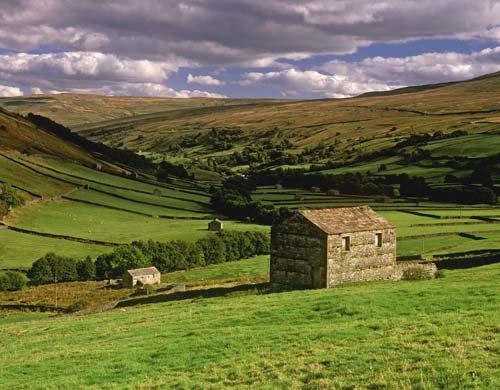
There are some great images there, well worth a look, but my favourite, more because it reminds me of home than anything else, is the photo above of Swaledale in the Yorkshire Dales (next to the wonderfully named Arkengarthdale).
It's a massive region of England and I don't think I was ever bored visiting because you can always discover something new - a working blacksmith, standing stones, gorgeous views, the giant golfballs of the US Air Force's Menwith Hill monitoring station, or one of the many waterfalls in the area.

Worth a visit if you're ever in the country and a great alternative to the usual sites (plus it's close to York, Ripon, Durham and other cities). (And no, I'm not being sponsored by the Tourist Board...)

Bookmark and Share

Two-nosed dog discovered in Bolivia


I was just listening to the Today programme on Radio 4 about a British explorer who has just returned from Bolivia. A predecessor many years ago had apparently come back with tales of a dog with two noses and, as you'd expect, was thought to be making it up.

Well, apparently it's true, as you can see in the picture above...

"My dog's got two noses"
"How does it smell?"
"Very well, thank you"

Bookmark and Share

New push to design against crime

According to the BBC:

"The government is launching a new drive to cut crime through innovative design.
It wants designers to develop new theft-proof products to try to reduce the number of items being stolen.

These would include things such as theft-proof bikes and buildings which are more difficult to break into.

The Home Office says one example is the 51 per cent fall in vehicle crime which can be attributed to design improvements such as immobilisers and toughened glass.

The Design and Technology Alliance will be made up of a panel of independent experts, who will work with the design industry to develop new products.

Home Office Minister Vernon Coaker said clever designs alone cannot stop a criminal.

'Designing to prevent a crime isn't the only solution. Of course tough law enforcement goes alongside that and criminals will always try to get round the new techniques that are in place.

'But I think that what you can say is that improved design makes a phenomenal difference.'"


See also:

Design Against Crime

The Home Office Design Against Crime site

DAC @ Central St Martins

Bookmark and Share

Thursday, August 09, 2007

Everything's an experience these days

At Dundee airport the other week I stopped at the little coffee cart (it's a tiny airport) and asked for a hot chocolate. Except they don't sell hot chocolate.

No, what they sell is a "hot frothed milk and chocolate experience". Or words to that effect.

Whatever, most of it ended up down the sink because my flight was called (needlessly early as it turned out) and you're not allowed to take hot chocolate, or indeed a "hot frothed milk and chocolate experience", through security in case you're a terrorist.

I suppose it could be a weapon, though hardly a weapon of choice. You could throw it in the face of a member of the cabin crew ("Experience this!" you would shout, presumably) but then you're stuffed. It's all gone and there's still a plane full of passengers, another member of the cabin crew, and a locked door to get through before you reach the pilot.

As it turned out, the flight was uneventful, except for one slightly worrying moment. I was sat next to the emergency exit which, every time that happens, comes with the phrase 'at least it means you can stretch your legs' but for some reason reminds me of those dreams where you're at school naked. (Everyone can see!)

As the plane took off (small plane so very noisy and bumpy) the little plastic cover that goes over the door-pull fell in to my lap. I jumped a bit, as you can imagine. Staring down, and calming down, I noticed it was normally attached via Velcro (which wasn't particularly reassuring, though I suppose it makes sense). All through take-off I kept looking at the now-exposed emergency door release fighting the urge to see how easy it would be to pull it. I mean, that has to be one of the least-tested parts of any plane, doesn't it?

After the plane levelled out I thought about sticking it back on again but had visions of being wrestled to the ground by an over-keen Harrison Ford wannabe who might have mistaken me for, well, a terrorist. So I did something I always wanted to do... I pressed the little button that calls a member of the crew. She appeared instantly (small plane, you see) and looked a bit puzzled (in a sort of 'here we go again' way) when I pointed at my lap. 'It fell off' I said, sheepishly, and she picked it up and stuck it deftly but firmly back on the patch of Velcro before returning to her duties (primarily, it later turned out, stewing the tea - must be why they used to be called stewardesses, I suppose).

Bookmark and Share

Dear Architects, I am sick of your shit.


A poem to any profession that takes themselves too seriously, spotted in Pidgin and quoted in full at Part IV architecture blog:

"Once, a long time ago in the days of yore, I had a friend who was studying architecture to become, presumably, an architect.
This friend introduced me to other friends, who were also studying architecture. Then these friends had other friends who were architects - real architects doing real architecture like designing luxury condos that look a lot like glass dildos. And these real architects knew other real architects and now the only people I know are architects. And they all design glass dildos that I will never work or live in and serve only to obstruct my view of New Jersey.

Do not get me wrong, architects. I like you as a person. I think you are nice, smell good most of the time, and I like your glasses. You have crazy hair, and if you are lucky, most of it is on your head. But I do not care about architecture. It is true. This is what I do care about:

* burritos

* hedgehogs

* coffee

As you can see, architecture is not on the list. I believe that architecture falls somewhere between toenail fungus and invasive colonoscopy in the list of things that interest me.

Perhaps if you didn’t talk about it so much, I would be more interested. When you point to a glass cylinder and say proudly, hey my office designed that, I giggle and say it looks like a bong. You turn your head in disgust and shame. You think, obviously she does not understand. What does she know? She is just a writer. She is no architect. She respects vowels, not glass cocks. And then you say now I am designing a lifestyle center, and I ask what is that, and you say it is a place that offers goods and services and retail opportunities and I say you mean like a mall and you say no. It is a lifestyle center. I say it sounds like a mall. I am from the Valley, bitch. I know malls.

Architects, I will not lie, you confuse me. You work sixty, eighty hours a week and yet you are always poor. Why aren’t you buying me a drink? Where is your bounty of riches? Maybe you spent it on merlot. Maybe you spent it on hookers and blow. I cannot be sure. It is a mystery. I will leave that to the scientists to figure out."


(Read the rest here - it's quite amusing.)

Bookmark and Share

Legal fight over the red cross symbol

The BBC is reporting a lLegal fight over red cross symbol:


Medical firm Johnson & Johnson (J&J) is suing the American Red Cross, alleging the charity has misused the famous red cross symbol for commercial purposes.
J&J said a deal with the charity's founder in 1895 gave it the 'exclusive use' of the symbol as a trademark for drug, chemical and surgical products.

It said American Red Cross had violated this agreement by licensing the symbol to other firms to sell certain goods.

The charity described the lawsuit as 'obscene'.

It said many of the products at issue were health and safety kits and that profits from their sale had been used to support disaster-relief campaigns.

The lawsuit asks for sales of disputed products - also including medical gloves, nail clippers, combs and toothbrushes - to be stopped and unsold items to be handed over to J&J."


Read the rest....


Makes you feel all warm inside, doesn't it?

Bookmark and Share

Conservatives rebrand - again


Design Week reports:

The Conservative Party is changing its tree logo from green (above) to blue, less than a year after its launch.

The identity redesign retains the scribbled tree shape, but it is now sky blue and features a cloud and a ray of sunlight.

The £40 000 scribbled tree logo was created by London design group Perfect Day to replace the flaming ‘freedom’ torch identity, which was introduced in 1977.

The new logo invited criticism when it was unveiled in September 2006, being compared to a child’s drawing, broccoli, and a coin scratch on a lottery card.

Party officials said last year that the tree represented ‘strength, endurance, renewal and growth’, and emphasised the party’s Green credentials.

Onlookers are speculating that the change in hue is calculated to appease the Party’s right-wing members, coming at a time when party leader David Cameron’s authority has been under attack. A party spokesperson responded by saying that the Tory logo was always intended to be flexible, to ‘display any number of background images’.

At the party’s spring conference, the logo was covered with blossom, while at the autumn conference in October it was given a yellowish tinge.


A blue tree? A blue fucking tree?

This is why I got out of design. I can imagine the agency that came up with this logo being told by some politician to make the tree blue because 'that's the colour of the Conservative Party'. 'But it's a tree, you tosser' would have been my considered response. 'Oh and it says 'Conservative' right next to it so it's not like anyone's going to mistake you for the 'Tree Party' is it?' Though given their current situation (David Cameron has achieved the impossible and returned them to their former status in the polls, by coming third in two by-elections) it might not be a bad idea to go for a radical rebrand and hope people do indeed confuse you for the Tree Party. Whoever they are.

Bookmark and Share

Wednesday, August 08, 2007

The secret of great photography? Use someone else's...

BBC News reports:

Digital photographers could soon be able to erase unwanted elements in photos by using tools that scan for similar images in online libraries.
Research teams have developed an algorithm that uses sites like Flickr to help discover light sources, camera position and composition in a photo.

Using this data the tools then search for objects, such as landscapes or cars, that match the original.

The teams aim to create image libraries that anyone can use to edit snaps.

James Hays and Alexei Efros from Carnegie Mellon University have developed an algorithm to help people who want to remove bits of photographs.

The parts being removed could be unsightly lorries in the snaps of the rural idyll where they took a holiday or even an old boyfriend or girlfriend they want to rub out from a photograph.


(In the example above, the house in the first photo has been isolated and replaced with boats and the rest of the lake found in someone else's photo of the same scene, taken at a different spot)


To find suitable matching elements, the research duo's algorithm looks through a database of 2.3 million images culled from Flickr.

'We search for other scenes that share as closely as possible the same semantic scene data,' said Mr Hays, who has been showing off the project at the computer graphics conference Siggraph, in San Diego.

In this sense 'semantic' means composition. So a snap of a lake in the foreground, hills in a band in the middle and sunset above has, as far as the algorithm is concerned, very different 'semantics' to one of a city with a river running through it.

The broad-based analysis cuts out more than 99.9% of the images in the database, said Mr Hays. The algorithm then picks the closest 200 for further analysis.

Next the algorithm searches the 200 to see if they have elements, such as hillsides or even buildings, the right size and colours for the hole to be filled.

The useful parts of the 20 best scenes are then cropped, added to the image being edited so the best fit can be chosen.

Early tests of the algorithm show that only 30% of the images altered with it could be spotted, said Mr Hays.

The other approach aims to use net-based image libraries to create a clip-art of objects that, once inserted into a photograph, look convincing.


'We want to generate objects of high realism while keeping the ease of use of a clip art library,' said Jean-Francois Lalonde of Carnegie Mellon University who led the research.

To generate its clip art for photographs the team has drawn on the net's Label Me library of images which has many objects, such as people, trees and cars, cut out and tagged by its users.

The challenge, said Mr Lalonde, was working out which images in the Label Me database will be useful and convincing when inserted into photographs.

The algorithm developed by Mr Lalonde and his colleagues at Carnegie Mellon and Microsoft Research analyses scenes to find out the orientation of objects and the sources of light in a scene.

'We use the height of the people in the image to estimate the height of the camera used to take the picture,' he said.

The light sources in a scene are worked out by looking at the distribution of colour shades within three broad regions, ground, vertical planes and sky, in the image.

With knowledge about the position, pitch and height of the camera and light sources the algorithm then looks for images in the clip art database that were taken from similar positions and with similar pixel heights.

The group has created an interface for the database of photo clipart so people can pick which elements they want to add to a scene."

Bookmark and Share

Tuesday, August 07, 2007

My feet hurt


I just got back from an 8 mile walk round Dundee using part of the 'Green Circular' route. (Click the image above for a bigger view. The numbers are mileposts - I walked clockwise from my home, down to the Tay, past the airport, up to Invergowrie, then north to Camperdown Park, up to Camperdown House, then south back home. A mix of country path, suburban cycle dirt track, pavement and concrete).

I planned it using a site called 'Map My Walk' which if you do a lot of walking might be worth a visit. There's also 'Map My Run' and 'Map My Ride' for cyclists. It's a nice mashup using Google Maps - I visited it last year when it was in beta and it's come on a long way. Well worth a look.

You can convert your route in to a Goggle Earth file so you can see your seemingly long walk on a global scale. If you're planning a round the world trip this could be just your thing. Here's my walk as a Google Earth file...

Bookmark and Share

Proof that design is important

Dundee University in the news again. And this time it backs up what I was saying about how design at university should be so much more than just producing Mac monkeys, even at undergraduate level.

(I saw some of these images earlier this year and they're a bit 'odd' (I can't think of the word I want - 'odd' isn't right) - they make serious illnesses look almost beautiful...)

(Click here to watch a video)


"Doctors are turning to graphic artists to help patients better understand their illness and course of treatment.

The artists turn medical images from 3D anatomical scans into less formidable forms, suitable for patients.

Trials of the system have shown it can aid understanding and deepen dialogue between patients and their care givers.

The system is also being used as part of a project to raise awareness among diabetics of some of the most serious side-effects of their condition.

'Doctors talk shop, which can be difficult for patients to penetrate,' said John McGhee, a PhD student and 3D computer artist from the University of Dundee, who helped to direct the visualisation project.

The tools and methods used to pass on information about illnesses and cures were as various as the doctors themselves, Mr McGhee said.

'None are that great,' he said.

But, by producing simplified images from detailed MRI scans, for example, patients can get a far better grasp of what is happening inside them, how it came about, and what is being done about it, he said.


(image of cancer cells)

The effect of the images has been used in a study of 18 patients suffering from arteriosclerosis, an illness that causes hardening of the arteries which can, over time, lead to heart attacks and stroke.

Initially, Mr McGhee said, the trial was all about whether the patients - average age 71 - could understand what the images depicted.

But, he said, it proved its effectiveness in other ways too.

'It was about imparting information but more importantly about getting a dialogue going on to help to get the patient discussing what is going on,' he said.

Exposure to the images also helped in subsequent discussions, said Mr McGhee.

'When they talk to health professionals and go armed with better questions and knowledge of their anatomy,' he said.

In a related project, computer graphics derived from medical images are being used in a bid to prompt diabetics to keep an eye on their health.

Run by PhD student Emma Fyfe, also from the University of Dundee, the project has produced a five minute film that explores the effect diabetes has on the retina.

In some cases diabetes can cause abnormalities in the blood vessels serving the retina and make sight deteriorate.

It was important for diabetics to have regular scans to catch the side effects of diabetes at the earliest opportunity, she said.

'If they catch it early they can stop it,' said Ms Fyfe. 'But they cannot go backwards; they cannot cure it.'

The film has been shown to the Scottish Diabetes Group and there are plans to show it to other groups around the UK.

The research was shown off at the Siggraph computer graphics convention being held in San Diego, US from 5-9 August."

Bookmark and Share

Monday, August 06, 2007

Dundee 'most cost-effective place to study in Scotland'

The BBC is reporting that according to the Royal Bank of Scotland

"Dundee is the most cost-effective place in Scotland to study, according to a survey of students' spending habits.

The city came top in a value-for-money comparison, ahead of Glasgow, St Andrews, Aberdeen and Edinburgh.

The research from the Royal Bank of Scotland (RBS) found Dundee had lower living costs and higher wages for part-time jobs.

The report said students in Dundee could be more than £1,100 a year better off than those in the Scottish capital.

The survey found that the average Dundee student would spend £134 on rent and bills, and earn £113 in one week."


So now I know what to say about any complaints from students when we ask them to buy the occasional book...

Bookmark and Share

Saturday, August 04, 2007

Dandy comic ditched


When I moved up to Dundee, one of the things that gave me a thrill was the fact it was home to The Beano and The Dandy amongst others, and I often walk past the printing works and take in the smell of the presses...


But according to the BBC:

"The world's longest running comic, The Dandy, has ceased to exist in its traditional format.
The weekly title has been changed to a fortnightly magazine called Dandy Xtreme.

Dundee-based publisher DC Thomson confirmed the comic had been given a major facelift in its 70th anniversary year.

It said favourite characters such as Desperate Dan would still feature in the central pull-out, Dandy Comix.

DC Thomson said the format of the publication had been updated because of feedback from readers.

Dandy editor Craig Graham said: 'Following extensive research, we discovered The Dandy readers were struggling to schedule a weekly comic into their hectic lives. They just didn't have enough time.

'They're too busy gaming, surfing the net or watching TV, movies and DVDs.'"


It's a sad day indeed.


Especially as they seem to have spelt 'Comics' as 'Comix'...

Video here

Bookmark and Share

Friday, August 03, 2007

Infrastructure is patriotic

The Minneapolis bridge collapse, like the failure of the New Orleans levees and, over the past few weeks, the flooding of large parts of the UK suggest that there are some things governments never learn: infrastructure is everything. (Famine in India, for example, is the result of a lack of decent storage and transport. They grow the food okay, but can't get it anywhere before it goes off. The answer isn't to drop our unwanted grain on them, it's to help them build infrastructure).

Actually, I think they do learn it. The real problem is that spending money on roads, rail, flood defences and so on is unpopular because it means raising money through taxes (or, particularly in the case of the US, not spending it on foreign wars but since that is really being funded by whichever countries are financing the US overdraft, it's a moot point).

Today in Britian the Liberal Democrats announced policies to add a £10 tax to flights and to tax road freight, raising (they say) billions of pounds to plough back in to rail. Nice policy, but the Lib Dems are good at coming up with nice policies because they know they'll never form a government. They often come up with 'common sense' ideas that no government would ever act upon because one thing you can say about the electorate is they don't like paying taxes while simultaneously demanding better services.

So in all the speculation about its causes will the bridge collapse be blamed on the Governor? Possibly. On the contractors? Perhaps. On the electorate for resisting higher taxes? On drivers for refusing duty on fuel to pay for road repairs? I wouldn't have thought so.

From BLDGBLOG: Infrastructure is patriotic:

"The Federal Highway Administration's annual budget appears to be hovering around $35-40 billion a year – and ... annual government subsidies for Amtrak come in at slightly more than $1 billion. That's $1 billion every year to help commuter train lines run.

To use but one financial reference point, the U.S. government is spending $12 billion per month in Iraq – billions and billions of dollars of which have literally been lost.

Infrastructure is patriotic.

There is no reason to question the political loyalties of those who would advocate spending taxpayer dollars on national infrastructure – from highway bridges and railway lines to steam pipes, levees, electrical lines, and subway tunnels – instead of on military adventures abroad.

Four months of foreign war would be enough to double the annual budget for the Federal Highway Administration – if that's what one would choose to spend the money on – taking care of quite a few of those 81,000+ bridges which are still open to traffic and yet 'functionally obsolete.'

Perhaps the best way to be 'pro-American' these days is to lobby for modern, safe, and trustworthy infrastructure – and the economic efficiencies to which that domestic investment would lead.

At the risk of promoting a kind of isolationist infrastructural nationalism, I'd say that urban design and engineering is a sadly under-appreciated – yet incredibly exciting – way to serve your country."


And from the comments:

The solution for another bridge, whose concrete is literally falling down as people drive underneath (there's a major highway underneath), was to put a structure underneath that catches the falling debris. Never mind the fact that the bridge might actually collapse. Maybe they hope the structure will also catch the bridge?


(Via Design Observer.)

Bookmark and Share

Thursday, August 02, 2007

Is design important?

From BBC news:

"A schizophrenia drug developed at Dundee University is to be tested as a new cancer treatment.
Ground-breaking research has revealed Rimcazole can also be used to fight cancer.

Scientists have discovered it restricts the growth of tumours and kills cancer cells, but has little toxic effect on healthy tissue.

Clinical trials will get under way later this year, with conclusive results expected within two years."


About a year ago, I moved in to my new flat and a man came round to install my telephone line (the previous occupant having, for some reason, carved through the old one with a bread knife).

We got chatting, as you do, and he asked me what I did for a living. I told him I teach at the university. He seemed impressed: "you'll be one of those people curing cancer then?"

"Er, not quite. I teach design history".

End of conversation (though he did later start telling me stories about Prince William's nights out in Dundee when he was studying down the road at St. Andrew's).

I can see the centre mentioned in that news report, where they work on cancer cures, from my office window, and occasionally I go to the little 'restaurant' they have there. It's full of people who look like the ones you used to go to school with who were good at science and liked wearing lab coats and big goggles. It's odd comparing it to the 'Cantina', the design school's refectory which, despite being open to all is monopolised by art and design students and staff who all seem keen to stand out from the crowd and manage, somehow, to look like one homogenous group.

But there's a quiet air of determination in the life sciences restaurant, as though everyone knows they're working on something important, and having lunch is an inconvenient truth their education manages to nag them with in a way their stomach can't. I walked past that building on Christmas Day and again on New Year's Eve and the lights were on, cars were parked, and people were at work. I suppose petri dishes don't do vacations.

So when I look out of my office window (something I save for the afternoon so I'm always sure I'll have something to do...) I can't help remembering that conversation with the telephone guy and my sense of guilt that I don't work on something as important as my colleagues in the white coats, many of whom probably get paid far less than me.

But should I feel guilty?

I think this is one of the things that should define design study at university. It shouldn't be about simply learning and repeating the skills needed to get a job, but about trying to understand how design works and how it can improve people's lives.
A presentation I went to earlier this year by researchers looking at the nearby Frank Gehry-designed cancer care centre, Maggie's Centre Dundee showed a real link between the design of buildings and the rate of improvement in patient health, irrespective of the drugs they were on, and other studies looking at the working space for nurses showed design to be an undervalued contributor to healthcare - a hospital is more than a set of rooms with beds and a few chairs and filing cabinets. Yet any hospital that spends money on good funiture and art for the walls will be accused of wasting money - why aren't we getting that message across more? Why do academics like talking to themselves so much but so rarely tell their stories to others?

If you look at many of the top concerns for people in the UK (and elsewhere) such as crime, terrorism, the economy, the environment and so on, there is a clear (and sometimes not so clear) role that design can play in each of these.
And it's the university's role to explore these - not just at the postgrad research level and beyond but at the undergraduate level as well.

Design is important. It will never win a PR war against cures for cancer (which, incidentally, are also 'designed', even if by accident as in the story above) and perhaps we should stop with the gnashing of teeth about this. But I can't help feeling that a philosophy for university-based design has to stop obsessing with churning out employees for a shockingly visionless and often amoral industry and start seeing its contribution in terms of changing society for the better.

Bookmark and Share

'Modern' Arabic typefaces


A couple of years ago a Korean student of mine explained to me how the Korean writing system worked - it was very ordered and logical and made a lot of sense. I noticed she had a few tourist leaflets with her for Brighton and London, in Korean, and that the typefaces were quite different on each. It hadn't really occurred to me before that you could have serif, sans serif, modern and antique Korean typefaces before (because I'd never really thought about it) and I began to realise that I'd only ever seen 'foreign' type on documents intended for western audiences -hence Chinese, Japanese, Korean and Arabic always looked 'traditional' (the way 'ye olde' English is always rendered in illegible Germanic type, I suppose.)

Anyway, the world of non-western typography is a rich one worth looking in to. Gill Sans for Chinese? Helvetica for Urdu?

The image above is from an interesting project, the Khatt Network for Arabic Typography:

The Typographic Matchmaking project was initiated by the Khatt Foundation (Amsterdam), in April 2005. The Khatt Foundation selected and invited five renown Dutch designers and matched each one of them with an established and upcoming Arab designer.

The aim was to facilitate a collaboration bewteen the Dutch and Arab designers in order to design Arabic typefaces that match and can become part of the font family of one of the Dutch designers’ existing font families. The main thrust of the project is to address the modernisation of Arabic text faces that can provide design solutions for legible Arabic fonts that answer the contemporary design needs in the Arab world (namely for publications and new digital media applications).


This project raises some interesting issues, in particular the one of how the symbolism of an 'exotic' or 'alien' language rendered in an 'exotic' or 'alien' way contributes to the alienation of the community that uses it. (The matter of 'modernisation' might also be another issue for some.)

Could rendering Arabic in western typefaces really be such a simple way of breaking down cultural barriers? It's an interesting idea.

Bookmark and Share

Visit my 'official' site

www.jonathanbaldwin.co.uk
contains links to my articles and books.

Tags

Books by Jonathan Baldwin

Visual Communication: From Theory to Practice (Winner of 'Best Higher Education Title' at the British Book Awards 2006) by Jonathan Baldwin and Lucienne Roberts Buy from Amazon.com Buy from Amazon.co.uk

More Than A Name: An introduction to branding by Melissa Davis and Jonathan Baldwin Buy from Amazon.com Buy from Amazon.co.uk

Blog Archive

Followers