I'm getting fed up with the bloody Tax Payers' Alliance. They seem to crop up more and more on the news and in newspapers, trotted out to provide a comment about council or government spending which usually involves them saying that whatever it is is bad news, and that tax payers demand better.
The Guardian has been giving them some attention recently, exposing their funding and ties to right wing politics. It's ironic that many of their highest profile supporters are also people who benefit most from government spending such as those involved in building the 2012 infrastructure (the Olympics being a TPA target) or transport subsidies (don't get the TPA started on that). The contradictions are rife.
As the cleverly named anti-TPA group The Other Taxpayers' Alliance points out, journalists seem keen to include quotes from an organisation that only has 20,000 "members" (they don't pay, just sign up to an email) rather than, say, a union that represents a million or more taxpayers.
It's worth visiting The Other Taxpayers' Alliance for some excellent analysis of the TPA and an amusing quote generator.
I read a story on the BBC's news website earlier that typifies the sort of crap we're having to put up with. Kent County Council has spent £20,000 on producing an online soap opera to help educate young people about issues such as sexual health and personal safety. Sounds interesting, sounds innovative, sounds like the sort of thing that other councils and organisations would be interested in hearing more about. Let's see some samples, let's hear from the people involved, let's hear from some of the target audience. What a great story! Does it work? Does in not work? £20,000 seems quite cheap...
Oh but I'm sorry! The story doesn't cover any of that. Instead it simply says how much it cost and then devotes a third of the story to a quote from Matthew Elliot, chief executive of TPA which the BBC describes as a "pressure group which campaigns for lower taxes."
Here's the section:
The TaxPayers' Alliance said people would prefer to pay lower council tax than spend money on experimental drama.
Matthew Elliot, chief executive of the pressure group which campaigns for lower taxes, said: "I'm sure most taxpayers would rather their money was in their pocket in the form of lower council tax, especially in the middle of a recession.
"Most young people will see through such blatant propaganda.
"It would be better to teach them about these issues in the classroom than try to be young and hip, reaching them by online television."
So here we have a problem. It's clear Matthew Elliot hasn't seen the video, or spoken to the people involved. He says "I'm sure most taxpayers would rather their money was in their pocket in the form of lower taxes". So he's not talking about research here - he hasn't gone out and asked anyone. He's offering an opinion. But he hasn't offered any evidence or context. For example, how much does Kent County Council spend on youth education and other projects each year? What's £20,000 as a proportion of that? How much does it cost to get someone off drugs? Or help a single teenage mother?
He then says "Most young people will see through such blatant propaganda" but hey, if a journalist at the BBC can't see through the TPA's blatant propaganda I think it's a fairly safe bet that young people will fall for anything too. Never mind, because there's another contradiction here: "It would be better to teach them about these issues in the classroom" because of course, young people will fall for anything if it's taught in the classroom in front of their peers rather than watched privately at home, won't they? You don't have to be a genius to know why online video is likely to be more successful than forcing a lesson on teenagers from a teacher who'd rather be talking about anything other than underage sex.
The Other Taxpayers' Alliance has a very funny media guide on their site which includes an analysis of a story on Moray council's advertisement for a street football coordinator. The TPA spat feathers and their press release was dutifully printed in various newspapers without any attempt at seeing the bigger picture. Their assertion was that spending money on someone to set up street football was a waste of money as all it takes is a couple of jumpers for goalposts and a football. Er, wrong! Street football is actually an excellent scheme that has managed to reduce petty crime and vandalism in areas where it's been tried out. It saves more money than it costs, but it needs coordinating because just dumping a couple of cardigans in the road doesn't cut it.
Street football is an excellent example of an easy, cheap scheme that gets results and should be encouraged. It saves taxpayers money, it doesn't cost them anything. But the arses at TPA don't care about that. They don't do research, they don't network, they don't think.
Well I give in. I just sent a complaint to the BBC which I've asked them to reply to. I'll post their response here when it comes. I think it's ironic that the BBC, a taxpayer-funded organisation that really should know better, is stooping to the same level as tabloids by failing to give value for money by simply recycling a press release and not entering into any actual journalism beyond getting a balancing quote from the council rather than, oh I don't know, talking to the people involved?
It's also ironic that the BBC is reporting this story without realising that the biggest producer of educational video tackling similar topics is... the BBC! Brilliant.
Here's my complaint:
In your story on an innovative scheme in Kent to educate young people on social issues using online drama, the report gives a great deal of coverage to criticism from the Tax Payers Alliance. There is no analysis and there are no examples of the videos in question.
There is no attempt to interview people who work in the area - for example social workers or teachers - or who have worked on the project, or to talk to the intended audience. Neither is there any context provided, For example, have similar schemes produced results? What are the costs associated with the issues being dealt with (for example, how much does it cost taxpayers to deal with the consequences of poor sexual health or personal safety?)
The quote from TPA is clearly one from someone who knows nothing about the issues involved, or who has seen the materials, or who has entered in to any research on the matter. The UK has many academics and professionals who would have been better options for comments based on knowledge, rather than politics.
This is a potentially very interesting story but has been turned in to the sort of thing I'd expect from a tabloid newspaper - hardly the standard I expect from the BBC. Perhaps the TPA should be asked if this is the sort of quality journalism we expect from our license fee?
I am particularly concerned that you have used the Tax Payers Alliance, yet again, for a comment. This organisation is not representative of tax payers, undertakes no research other than a trawl through local papers looking for odd-sounding stories and, as demonstrated in this story, is clearly willing to come up with some damning reactionary quote rather than look in to the story more carefully before offering a considered opinion.
It's "membership" is tiny, especially compared with, say, the unions that represent the people concerned here: social workers, teachers, council staff. Or, indeed, the many voluntary organisations that work in this area. These would have made far better sources.
This is a very poorly written story, and relies on an uneducated non-specialist comment to frame the project as "a waste of money" when in fact it could be money very well spent. A better-researched story might have offered illumination. Instead it demonstrates poor practice and poor journalism.


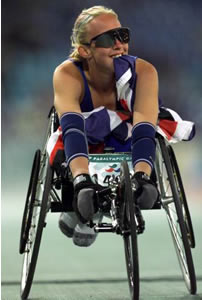 But to take a view like that is to miss what we might arguably call the ‘real’ design, the design that’s the product of years (if not decades) of intense research into textiles, alloys, aerodynamics, ergonomics and more. When people talk of the millions of pounds spent on sports in the UK, they may think that all gets spent on training. But it doesn’t. Chris Hoy’s bike, Rebbeca Adlington’s swimming costume, Charlotte Burgess’s bow, and Deborah Brennan’s wheelchair are all the result of investment worldwide in design research.
 Visual Communication: From Theory to Practice
(Winner of 'Best Higher Education Title' at the British Book Awards 2006)
by Jonathan Baldwin and Lucienne Roberts
Visual Communication: From Theory to Practice
(Winner of 'Best Higher Education Title' at the British Book Awards 2006)
by Jonathan Baldwin and Lucienne Roberts
 More Than A Name: An introduction to branding
by Melissa Davis and Jonathan Baldwin
More Than A Name: An introduction to branding
by Melissa Davis and Jonathan Baldwin